Four hundred and eighty units. A normal first order for hopper toys, and enough to fill one and a half pallets once the color boxes are stacked and strapped.
Most factories won’t quote you below two thousand pieces, which is exactly how a first-time buyer ends up with a container of inflatable animals that photograph beautifully on a sample table and then sit in a 3PL for eleven months, because nobody checked the seat height against a two-year-old’s actual inseam before the deposit went out.
Two numbers decide whether a hopper toy ever reorders
31%.
That is the share of bouncy hopper buyers in our own order book who come back inside ninety days, and nearly every one of them is selling the 45–48cm class rather than the showpiece animals that dominate trade-show booths — the ones photographed at knee height with a model toddler mid-bounce, legs tucked, hair flying.
The 60cm dinosaur bounce toy is the honest example. Spectacular on a shelf. Genuinely hard for a four-year-old to mount without an adult holding the tail.
So who is it for, really?
The 150-piece floor, and what it actually buys
150 pieces is our floor for a custom mold.
What that number buys is not 150 finished hoppers — it buys a tool, an electroformed copper-nickel shell for a rotocast skin or a set of steel cavities for a blow-molded body, and then you rent that tool back from yourself 150 times, which is the only arithmetic that lets a small buyer order a custom animal hopper and still keep retail margin after freight.
Below that floor the tooling cost per unit turns ugly, and anyone who tells you otherwise is quoting you someone else’s stock mold and calling it custom.
Two thousand units, one wrong valve — that is the entire story of a recalled season!
What the spec sheet hides
Four shapes from the current animal hopper range, measured the way a buyer should measure them:
| Item | Animal | H × W × L | What the width means |
|---|---|---|---|
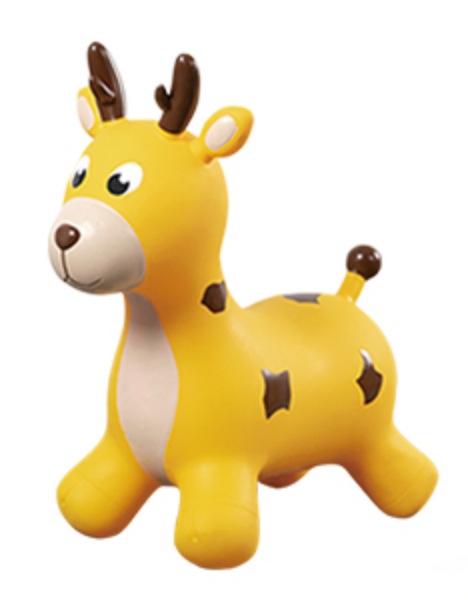
| CB-A301 | Yellow deer | 53 × 27 × 56cm | Widest stance; steadiest for a nervous first rider |
| CB-A305 | Blue giraffe | 47 × 26 × 56cm | Long neck reads well at shelf level |
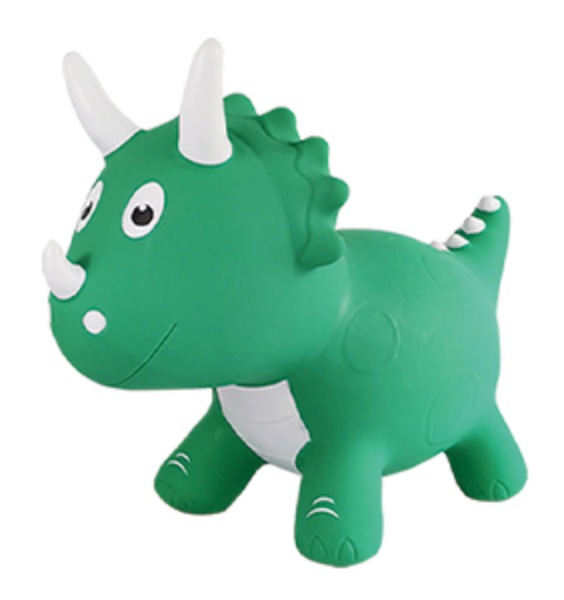
| CB-A316 | Green dinosaur | 46 × 27 × 62cm | Longest body; needs a deeper carton |
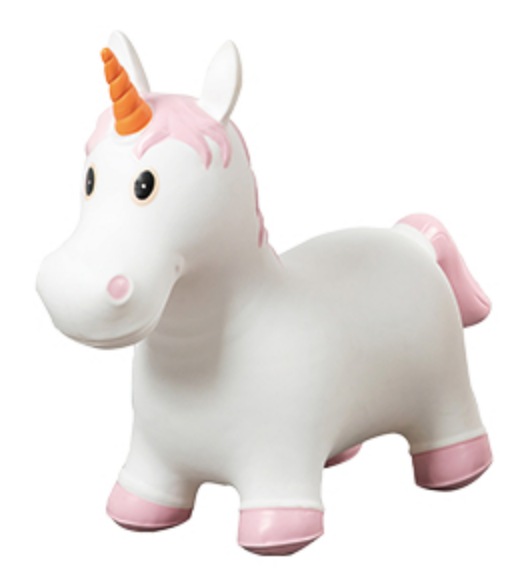
| CB-A325 | White unicorn | 48 × 23 × 61cm | Narrowest — great on a crowded shelf, twitchy on tile |
Look at the width column.
A 4cm difference between the deer and the unicorn is invisible in a catalog photo and very visible on a kitchen floor, because a bouncing animal bouncer is a balance problem before it is a toy, and a narrow body under a fast toddler tips in a way that a wide one simply doesn’t.
Height matters too, just not the way catalogs imply: 45cm is the practical ceiling for the 2-year-old crowd, and anything marketed to bouncing toys for toddlers above 50cm is really a 3-to-5 product wearing a younger age label.
PVC skin, cloth cover, and the question nobody asks
Who actually tests a bouncy animal hopper at 38°C inside a sealed container for six weeks?
We do, now — after a plastisol batch softened enough in transit that a riding toy horse arrived with one leg folded under it, and the buyer sent photos of forty units leaning like they’d had a long night.
Two constructions, two failure modes. The plastic body — the classic inflatable riding toy everyone pictures — is a plastisol skin over a bladder, and what matters is phthalate compliance (6P, not 3P) and the valve seat, not the wall thickness buyers keep asking about. The cloth-covered family, items CB-A356 through CB-A377, hides the bladder under a printed plush cover, which solves the sticky-summer complaint and creates a new one: the cover zipper is the first thing a curious child finds.
A shipment from last October
Twelve hundred plastic hoppers, Rotterdam, mixed deer and horse, packed 20 to a carton.
Three weeks after arrival the buyer reported 40 units losing air overnight, and the cause wasn’t the skin at all — it was a Schrader valve seated a half-turn shallow, so the cap held pressure at the factory and the bounce load opened it in a living room.
Fix: a deeper valve seat in the mold, plus a one-line deflation card in the box. Reorder rate on that program is now the best we have, which tells you something unflattering about how much buyers value being told the truth the first time.
On Bullseye, and why we pass
The bullseye animal hopper query is enormous, and most of that traffic wants a very specific animated horse from a very specific studio.
We mold a generic animal hopper horse — floppy ears, no trademark. Molding the licensed likeness without the license is how a small brand gets a letter it cannot afford to answer, and no amount of “it’s just a prototype” survives that conversation.
Same logic applies to the whole farm hoppers family: farm hoppers horse, donkey bounce toy, the lot. Generic silhouettes sell worldwide; character likenesses sell until someone’s lawyer notices.
Compliance is boring until the invoice arrives
US retail wants CPSIA plus ASTM F963-23, including the phthalate screen; the EU wants EN 71-1/2/3 and a technical file that survives a customs question. Age grading drives everything else — a childrens hopper labeled 12M+ gets pulled the first time a retailer’s own QA reads the packaging copy.
We carry BSCI and Sedex audits and run ISO 9001 through the Suqian plant, which is less glamorous than it sounds and more useful than any catalog cover.
What I’d do with 150 pieces
Frankly, most hopper catalogs are lies dressed as photography — every animal looks equally sellable, and that is never true.
Order three colors of one mold instead of one color of three molds. Put the widest body in front of your slowest-selling retailer and the narrow one in the impulse channel. Test bouncy toys for toddlers against plain bouncy toys in the same listing and watch which phrase converts, because the search data is a decent mirror of buyer confusion: hopper toys, bouncy hoppers, animal bouncers, jumping toys children, toys hoppers — one object, five names, five different intents.
And if you sell through mass retail, study what hoppers walmart listings do to price expectations before you set yours.
FAQ
What is the smallest order for a custom animal hopper?
150 pieces for a custom mold, in one color, one size. Mixed colors within the same mold cost less than most buyers expect because the tooling is already paid.
Can a 2-year-old ride a bouncy horse hopper?
Yes, at 45cm and below, on a flat surface, with the valve cap checked. Above that the mounting height becomes the limiting factor long before the weight rating does.
Do you make bee bouncer and bull hopper shapes?
Yes — those are mold variants of the same body, which is why they don’t carry a separate tooling charge once the base shape exists.
Full range, packaging options and carton data sit on chibetoy.com. If you’re weighing a first run, send the animal, the market and the quantity — we’ll answer with a costing breakdown rather than a range, and you can recieve it as a spreadsheet instead of a PDF.
Chibe makes inflatable PVC toys and sport toys in Jiangsu, China, for retail and cross-border sellers.